
Books
Recommended reads for women navigating midlife and beyond.
See all “Feminism & Women's Rights” resources across all types →

A Single Swallow
On the day of Japan’s 1945 surrender, three men — an American missionary, a US gunner’s mate, and a local Chinese soldier — make a pact to return in death, each year, to the village where they survived the war. Seventy years on, their souls reconvene, still bound by the woman each of them loved: Ah Yan, called Swallow, who endured unspeakable atrocities and met them with grace and dignity. As their memories converge, the shape of her extraordinary life comes into view.
Why it’s here: Though narrated by the three men who loved her, the novel is ultimately the portrait of one woman’s lifelong endurance and dignity — her story reclaimed from the men who remember it.

After Amba
Amba is a fashion and travel writer and a 1920s “New Woman” — she flouts the mores, climbs the barriers, makes some deeply questionable choices, and loves a woman named Ida against the whole grain of her age. Then she dies in a mid-air collision.
Seventy years on, her brother Andrew hires a young research librarian, Frasey, to put Amba’s archive in order, and Amba proceeds to take over Frasey’s life as thoroughly as she took over her own. Stephanie Shields writes it joyous and dark by turns, with a full-circle ending readers keep singling out.
Why it’s here: Amba is a woman whose whole life gets weighed only after it ends — by the people left holding her papers, seventy years on. It is a novel about who gets to decide what a woman’s life meant, which is a question that arrives for all of us eventually.
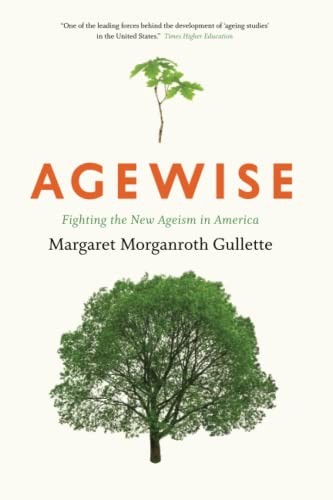
Agewise: Fighting the New Ageism in America
Margaret Morganroth Gullette argues that aging is not a biological fate but a cultural construction — that we are “aged by culture” long before our bodies slow down. This rigorous, impassioned book gives women the intellectual tools to identify and resist the ageism that shapes how we see ourselves and each other.

Girl in a Box
A fictionalized life of Japanese poet Yosano Akiko, who defied her era’s constraints to become a pioneering feminist and the first to render The Tale of Genji into modern Japanese. Through poverty, betrayal, earthquake, and fire, her fierce devotion to art wounds her daughter — and she sets out to make amends before it’s too late.
Why it’s here: It follows Akiko across a whole life into older age — an unflinching portrait of a woman artist aging and trying to repair what her ambition cost.
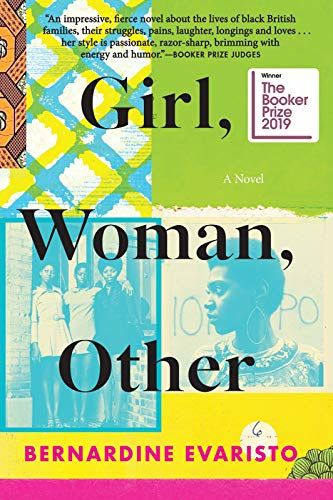
Girl, Woman, Other
Bernardine Evaristo’s Booker Prize–winning novel follows twelve characters — mostly Black British women, spanning generations from a teenager to a woman in her nineties — whose lives interweave across a century and the length of Britain, from Newcastle to Cornwall. Each is chasing something: a shared past, an unexpected future, a place to belong, a lost mother or father, a touch of hope. Told in Evaristo’s fluid, near-verse style, it is a portrait of British womanhood as it has rarely been written.
In Our Prime: How Older Women Are Reinventing the Road Ahead
Media scholar Susan J. Douglas examines how women who came of age in the 1960s and ‘70s are now rewriting the script for older womanhood — rejecting the invisibility and passivity assigned to them by culture while honestly confronting the realities of aging. A sociological portrait of a generation refusing to go quietly.
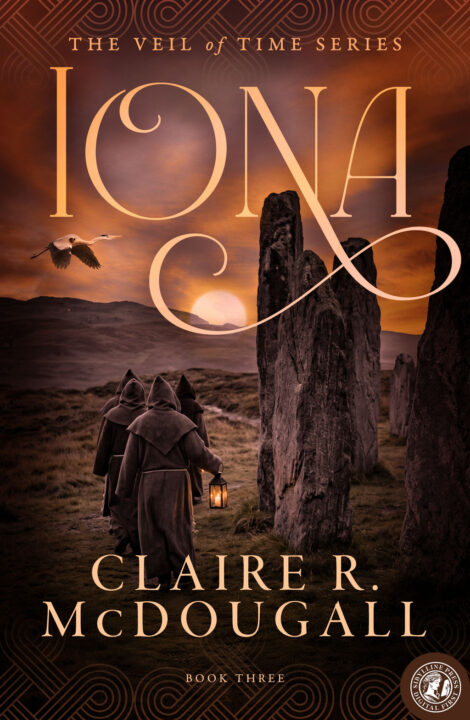
Iona: A Veil of Time Novel
Book three of the Veil of Time series. Drawn once more into eighth-century Scotland, Maggie lands in the middle of a bitter struggle between the rising Christian Church and the old Pictish traditions — a conflict centered on Iona, the sacred Isle of the Druids, where monks mean to raise a monastery on ground hallowed by generations of Fergus’s ancestors. Reunited with Fergus and his now-grown daughter as the fighting builds, she is pulled for the first time not only into the past but into an alternate future: one where the old beliefs were never erased, and where women lead a thriving technological society in the shadow of Dunadd.
Why it’s here: This is Celtic time-slip fantasy rather than a story about later life, published by Sibylline Digital First, whose whole list is women authors over 50. It sits on CroneHub for the thread running underneath the adventure — an older faith set against the church that displaced it, and an imagined future in which women hold the authority. A long view of women’s power, written by a woman writing in her own second half.
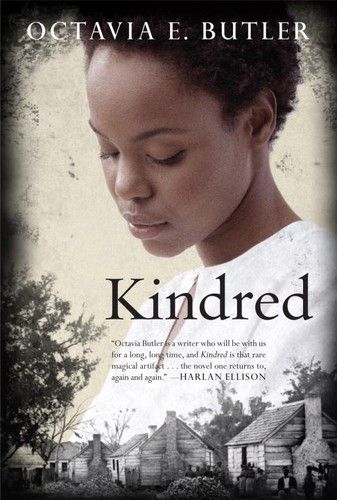
Kindred
On her twenty-sixth birthday in 1976, Dana, a young Black writer in California, is wrenched back through time to an antebellum Maryland plantation — summoned again and again to save the life of the white slaveholder who is her own ancestor. To secure her own existence she must survive the brutal world that made her. Octavia Butler’s genre-defining novel fuses science fiction and slave narrative into an unflinching meditation on power, kinship, and inheritance.
Why it’s here: Dana is a young protagonist, but Kindred is a foundational text on Black women’s lineage and the long reach of history — the legacy older readers carry and pass on — from one of the most important voices in American letters.
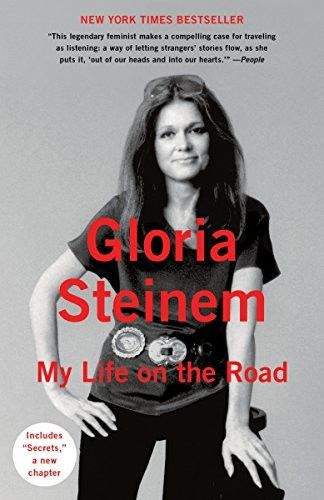
My Life on the Road
Gloria Steinem spent decades traveling for the feminist movement — organizing, speaking, listening, agitating. Her memoir of those years on the road is also a meditation on why travel and conversation are themselves political acts, and on the communities of women who changed American life one room at a time.
No Stone Unturned
Maggie Kuhn founded the Gray Panthers at 65 after being forced to retire from her job — and spent the next two decades as one of America’s most formidable activists for the rights of older people. Her autobiography is a testament to what becomes possible when a woman stops accepting what she’s told and starts organizing.
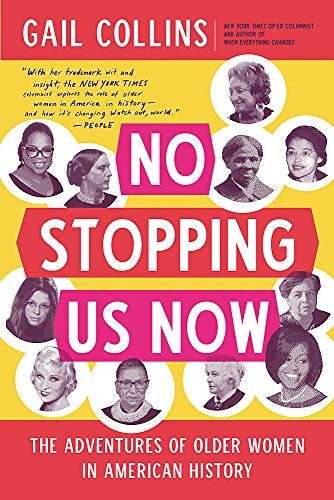
No Stopping Us Now: The Adventures of Older Women in American History
Gail Collins surveys three centuries of American history to show that older women have always been more influential, more inventive, and more powerful than the culture acknowledges. From colonial grandmothers to suffragists to modern activists, No Stopping Us Now recovers a hidden history of elder women who refused to step aside.
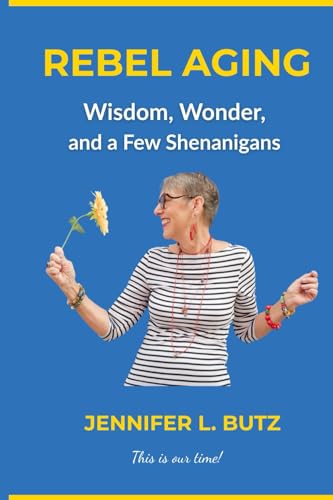
Rebel Aging: Wisdom, Wonder, and a Few Shenanigans
Jennifer L. Butz launched WonderCrone after colliding head-on with ageism at sixty, and Rebel Aging is her witty, clear-eyed reckoning with the myths women are handed about life after fifty. Part manifesto, part mirror, part marching orders, it reframes aging not as a descent but as a return — to voice, to vision, to self. Through personal stories, cultural critique, and a few well-placed shenanigans, Butz exposes how ageism shows up in our bodies, work, and relationships, and makes the case that wonder, wisdom, and purpose beat the lie of “anti-aging” every time. A rallying cry for reclaiming your edges, your joy, and your seat at any table.

Restless Dolly Maunder
Born at the end of the nineteenth century into a poor farming family in rural New South Wales, Dolly Maunder spends her life pushing at the doors society keeps locked to determined women. A husband and two children never quell her search for independence and a life she can call her own. Drawing on the story of her own grandmother, Kate Grenville traces one woman’s stubborn, costly climb — from girlhood to old age — through a world of limits. Shortlisted for the 2024 Women’s Prize for Fiction.

The Calculating Stars
In an alternate 1952, a meteorite strike devastates the U.S. East Coast and forces humanity to race for the stars before Earth becomes unlivable. Dr. Elma York — a former WWII WASP pilot and gifted mathematician working as a human ‘computer’ for the fledgling space program — battles entrenched sexism and her own anxiety to win a place among the first women astronauts. Winner of the Hugo, Nebula, and Locus awards.
Why it’s here: Elma is in her thirties in this first book, but the series grew from Kowal’s short story ‘The Lady Astronaut of Mars,’ in which Elma is a 63-year-old astronaut called back for one last mission — an older woman’s story of nerve and competence that anchors the whole arc.
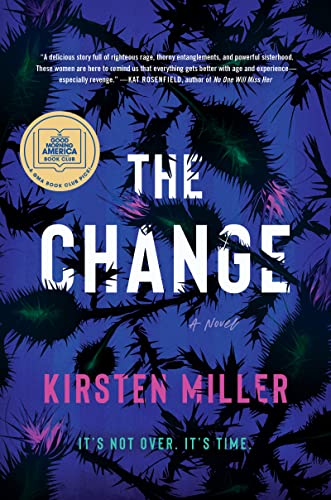
The Change
Three women — all navigating the particular rage of perimenopause — discover that the hot flashes aren’t the only things that have changed. Kirsten Miller’s novel is a feminist revenge fantasy wrapped in literary fiction, in which menopause confers not weakness but power — and the women most underestimated by their world become its most dangerous members.
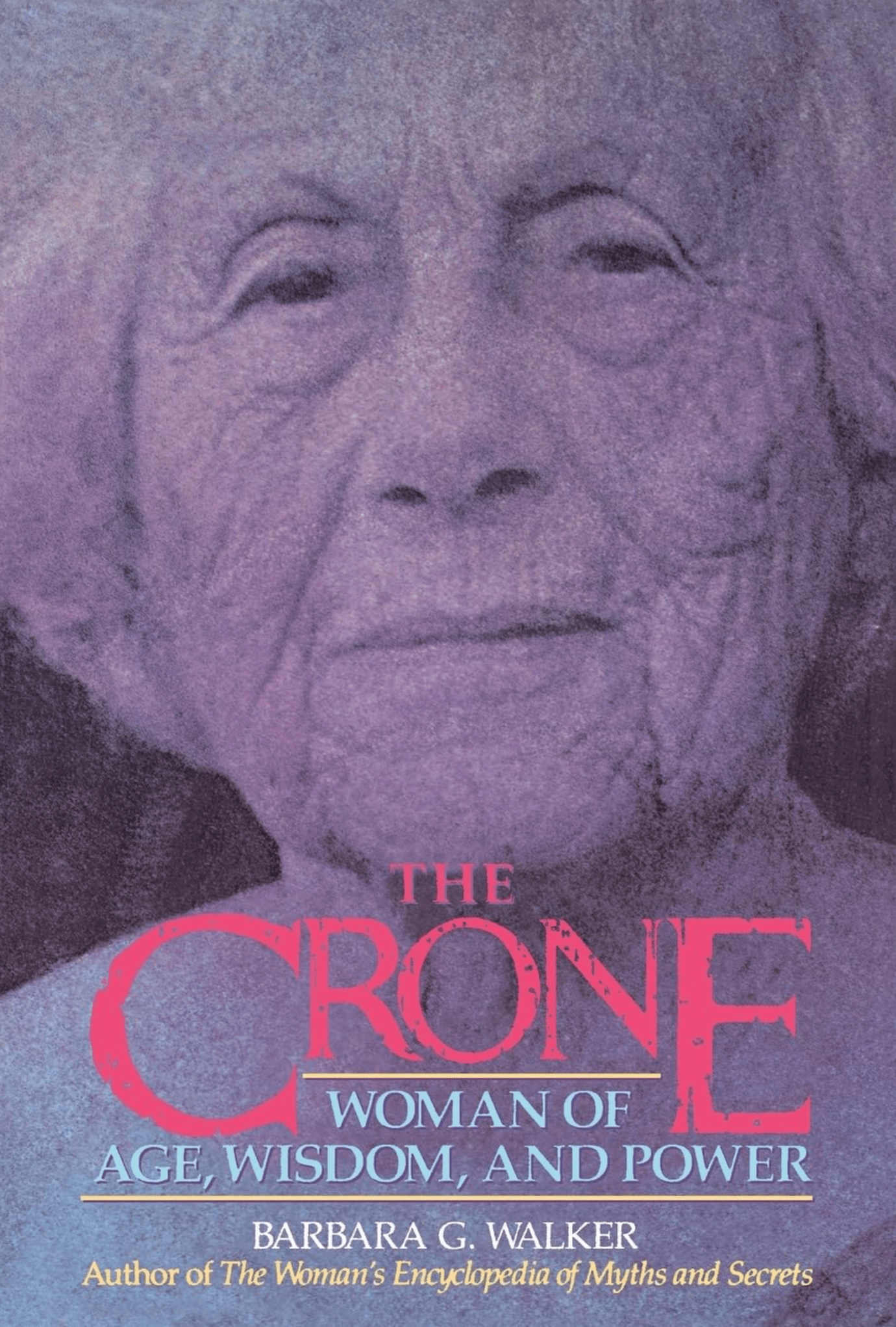
The Crone: Woman of Age, Wisdom, and Power
Barbara Walker reclaims the ‘crone’ archetype from its derogatory associations, presenting the post-menopausal woman as a being of power, wisdom, and spiritual authority in pre-patriarchal traditions. A foundational feminist text on aging.

The Fated Sky
The second Lady Astronaut novel carries Elma York from the Moon colony toward the first crewed voyage to Mars, navigating the politics, racism, and personal toll of who gets to leave a dying Earth. A tense, deeply human account of ambition and sacrifice in the space race.
Why it’s here: Part of a series anchored by an older-woman protagonist — Elma begins as a young pilot and ages across the arc into the 63-year-old astronaut of Kowal’s original ‘Lady Astronaut of Mars.’
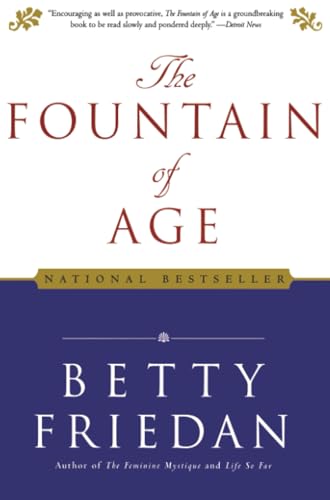
The Fountain of Age
In this landmark work, Betty Friedan — author of The Feminine Mystique — turns her attention to what she calls the “age mystique”: the cultural insistence that growing older is only decline. Drawing on years of research and hundreds of interviews, she argues that the later decades can be a period of continued growth, purpose, and new freedom rather than a slow fade. Friedan dismantles stereotypes about work, sexuality, and care in old age, insisting that vitality after sixty is not the exception but the possibility. A foundational text for anyone rethinking what age can mean.
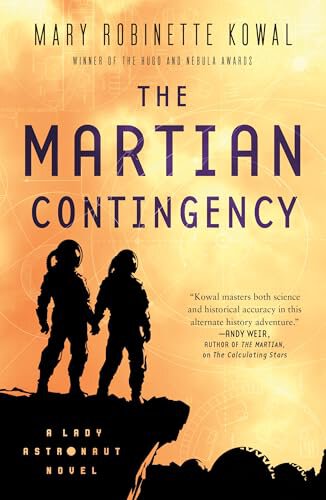
The Martian Contingency
The fourth Lady Astronaut novel returns to Elma York on the first permanent Mars base, where a covered-up disaster and the hard work of building a fair society off-world test the colony — and her.
Why it’s here: The continuing arc of Kowal’s Lady Astronaut, whose protagonist ages from young pilot toward the 63-year-old astronaut of the series’ origin story — a long view of one woman’s life in science and space.
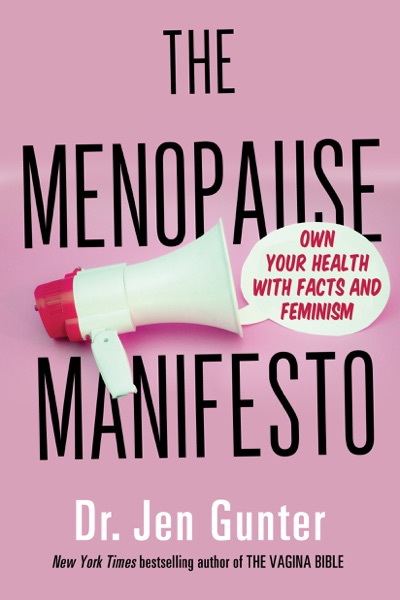
The Menopause Manifesto
Dr. Jen Gunter cuts through menopause misinformation with science, humor, and feminist fire. Tackles HRT, bone health, cardiovascular risk, and medical neglect of menopausal women.

The Relentless Moon
Running alongside the events of The Fated Sky, this installment shifts to astronaut Nicole Wargin — former WASP pilot, governor’s wife, and reluctant spy — as she hunts a saboteur threatening the Moon colony while Earth First terrorism escalates back home.
Why it’s here: Its narrator, Nicole, is a seasoned older astronaut reckoning with power, a political marriage, and a body that doesn’t always cooperate — an unusually rich portrait of a capable woman in the second half of life.
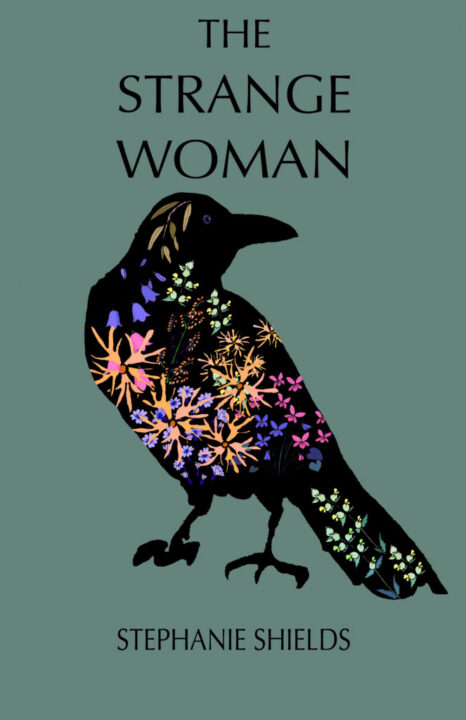
The Strange Woman
In 1621 the Yorkshire poet Edward Fairfax accused seven women from the village of Timble of witchcraft. They were tried twice at York and acquitted twice. Stephanie Shields retells the Trial of the Timble Witches from the women’s side, above all Margaret Hall’s — the strange woman of the title.
Four hundred years on, in the same valley, Margaret’s descendant Foster Hall is a curmudgeonly sheep farmer in want of a wife, and the witches have not finished interfering. A fusion of feminism, farming and the fantastical, written by a woman who farms sheep in the valley where it is set.
Why it’s here: Margaret Hall and the women of Timble were accused, imprisoned and tried by a powerful man who found them inconvenient — and they outlasted him by four hundred years. For any woman who has felt herself become inconvenient with age, this is a story about the kind of strength that gets handed down.

Violeta
In a letter to someone she loves above all others, Violeta recounts a life spanning a hundred years and two pandemics — from her birth in the 1920s, as the Spanish flu reaches her South American homeland, to old age. Through the Great Depression, the rise and fall of tyrants, and the fight for women’s rights, she lives devastating heartbreak and passionate affairs, poverty and wealth, terrible loss and immense joy. Isabel Allende delivers an epic, deeply emotional portrait of a woman whose passion, determination, and humor carry her through a century of upheaval.